
High pressure cleaning for driveways, paths, patios and pool surrounds
Driveways, paths, patios and pool surrounds — mould, moss and black streaks gone.
Not sure this is the right fix? Send a photo on WhatsApp and we’ll tell you.
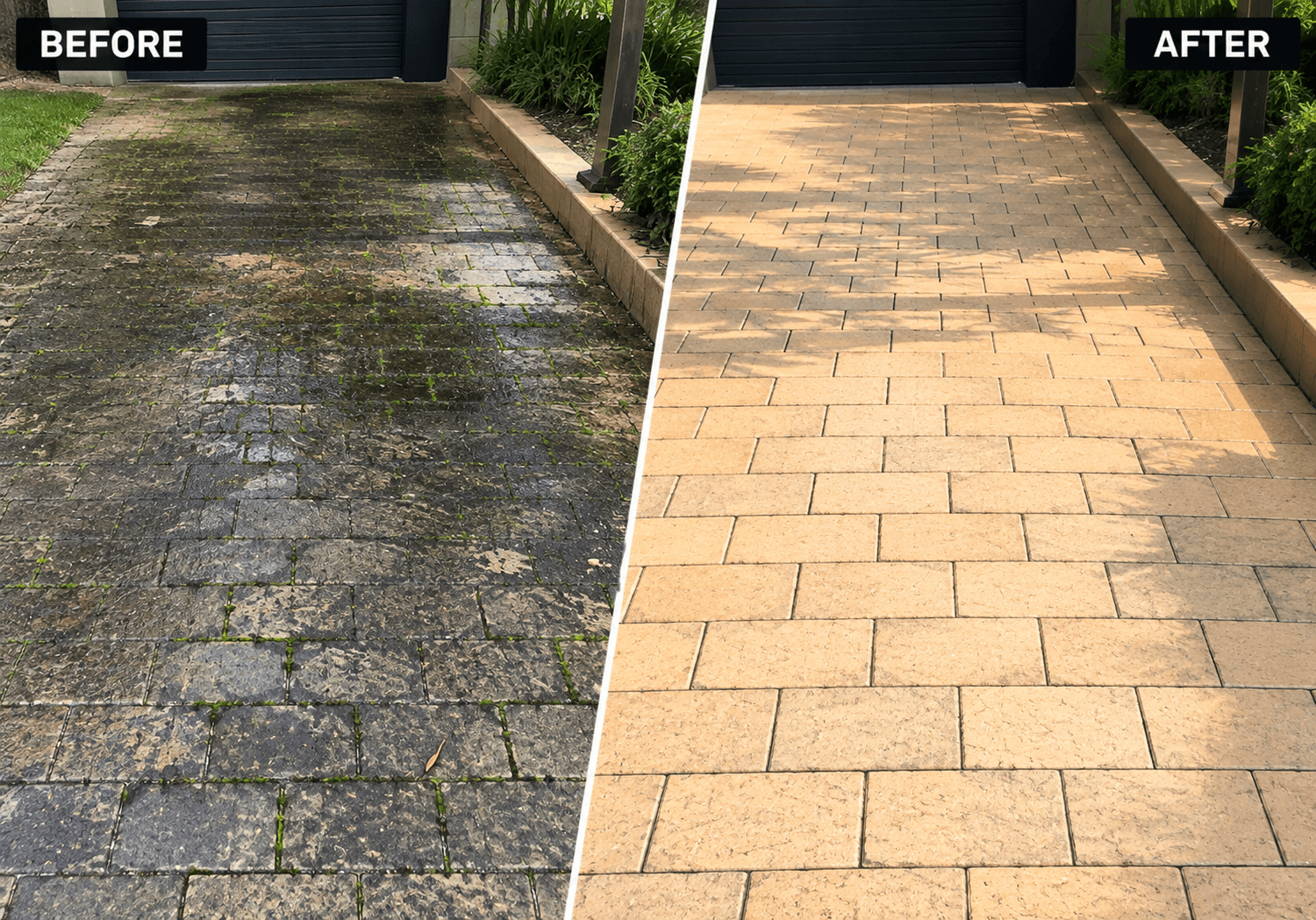
What pressure cleaning actually involves
The mark of a bad pressure wash is stripes — the tell that someone waved a turbo nozzle at a slab freehand. We run a rotary surface cleaner, which holds a fixed distance and overlaps its own path, so the finish is even across the whole area. Hard-to-reach edges and detail get the wand, at a pressure chosen for the surface.
Most of what looks like dirt on Queensland concrete is biological: mould, algae and lichen feeding on moisture in the shade. Pressure alone knocks the top off and it returns within months. We apply a treatment that kills it at the root first, which is why our work stays clean noticeably longer.
Pressure has to suit the surface. Full pressure will destroy sandstone, strip render, force water behind cladding and blow the sand out of paver joints. We drop the pressure and change the method for those, and re-sand paver joints afterwards where they need it.
Available across Brisbane, Gold Coast, Ipswich, Logan and the Sunshine Coast, seven days a week, 7am–9pm, incl. weekends.
What happens on the day
Five steps, start to finish. Same either way — home or commercial.
We check the surface
Concrete, pavers and sandstone each need a different pressure.
Mould treated
We kill it first, so it doesn’t grow straight back.
Area protected
Garden beds, gutters and downpipes covered before we start.
Even machine wash
A rotary cleaner gives one even finish, with no stripes.
Edges and joints
Corners done by hand, and paver joints re-sanded.
Pressure Cleaning in your region
Pressure Cleaning — your questions
Still unsure? Message us and we’ll answer in plain English.
Ask on WhatsAppWhy does the mould come straight back after a pressure clean?
Because pressure alone only knocks the top off it. Most of what looks like dirt on Queensland concrete is biological — mould, algae and lichen living on moisture in the shade — and the root system stays in the surface after the visible growth is blasted away. We put a treatment down that kills it first and then wash, which is why our work stays clean noticeably longer than a wash on its own.
Will pressure cleaning damage my pavers, sandstone or render?
It will if the pressure is wrong, and this is where most damage happens. Full pressure strips render, destroys sandstone, forces water behind cladding and blows the sand straight out of paver joints. We match the pressure and the method to the surface, and re-sand paver joints afterwards where the wash has opened them up.
What causes the stripes people end up with?
Someone waving a turbo nozzle at a slab freehand. The wand cleans a narrow band and the overlaps never line up, so the finish is banded. We run a rotary surface cleaner, which holds a fixed distance off the concrete and overlaps its own path, and only use the wand on edges and detail where a machine cannot reach.
Can you seal the driveway afterwards?
Yes, and it is worth it on a driveway that has just been brought back — sealer slows the mould returning and makes oil far easier to lift next time. It is quoted separately rather than folded in, because it needs the concrete fully dry, which usually means coming back on a second day.